Zotup

Zotup logo
Maximum Iimp 50 kA (10/350 µs) on the L 50/100 Type 1+2 range
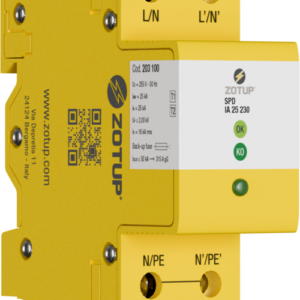
AC nominal voltage 230 V, 230/400 V, 400/690 V, 480/830 V, 554/960 V
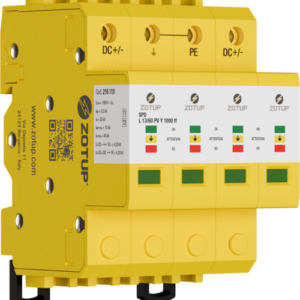
PV DC protection 600 V and 1000 V, three-varistor Y configuration
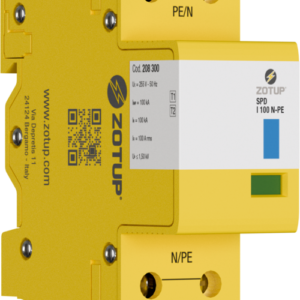
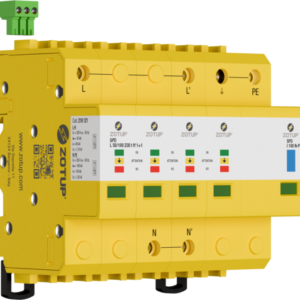
N-PE spark gaps For TT systems, CT2 insertion per HD 60364-534
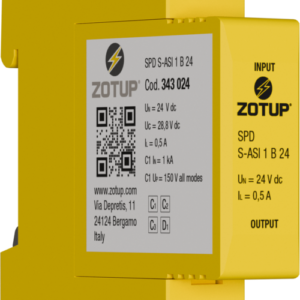
Data and signalling 6, 12, 24 and 48 V working voltages

Zotup at a glance

CompanyZotup S.r.l.
CountryItaly
HeadquartersStezzano, Bergamo
Founded1986
Business typeManufacturer
SpecialisationSurge protective devices, exclusively
ClassificationsT1, T1+T2, T2, T3, and C1/C2/C3/D1 for data
StandardsIEC 61643-11 and EN IEC 61643-11, 2025 editions
Product familiesZotupLimiter, ZotupGap, ZotupComb, ZotupBox, ZotupFilter, ZotupLED, ZotupSignal, ZotupData, ZotupCoax
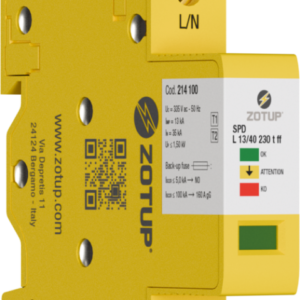
DistinctiveEPP progressive residual-performance indicator with remote reserve-status contact

Zotup is an Italian manufacturer of surge protective devices, founded in 1986 and based at Stezzano in the province of Bergamo. The company builds nothing else — the entire catalogue is surge protection, from Type 1 combined arresters at the origin of an installation through to signal-line protectors rated in single volts.

The range covers AC low-voltage systems in Type 1+2, Type 2 and Type 3 classifications, DC and photovoltaic circuits up to 1000 V in the Y configuration, LED lighting, signalling and telecommunication networks, data transmission, coaxial lines, and surge arresters for high-voltage systems. Products carry the ZotupLimiter, ZotupGap, ZotupComb, ZotupBox, ZotupFilter, ZotupLED, ZotupSignal, ZotupData and ZotupCoax family names, and are declared to the 2025 editions of IEC 61643-11 and EN IEC 61643-11.

Two design decisions run through the range and are worth knowing when comparing quotations. First, the EPP status indicator reports residual performance on a progressive three-colour scale rather than a simple end-of-life flag, with a remote contact that follows the reserve status — so an SPD can be replaced while it is still protecting. Second, several ZotupLimiter series need no upstream overcurrent limitation where the line breaker is below 160 A and the prospective short-circuit current is under 5 kA, which removes a fuse, a module and a coordination calculation from the board.