Shandong Energy Group (Fortune Global 500 #75, 2024)
Product focus
Static var generators, active power filters, filter capacitors, VFDs, energy storage
SVG voltage range
6 kV ±10% to 35 kV ±10%
Output capacity
±0.1 Mvar to ±200 Mvar
Response time
<5 ms (controller ≤1 ms)
Ride-through
LVRT 0 pu 150 ms, 0.2 pu 625 ms
Communication
Ethernet, RS485, CAN, optical
WindSun Science & Technology Co., Ltd, which trades under the FGI brand, is a national high-tech enterprise affiliated with Shandong Energy Group — ranked 75th in the 2024 Fortune Global 500. FGI listed on the Shanghai STAR Market on 13 April 2021 under stock code 688663, the first Shandong provincial state-owned enterprise to do so, and employs more than 1,000 people.
The company specialises in power electronics: static var generators (SVG) and active power filters for power quality, high voltage and low voltage variable frequency drives, solid state transformers, energy storage systems, and flameproof and intrinsically safe equipment for mining.
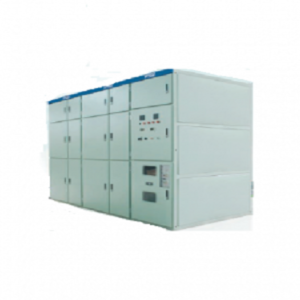
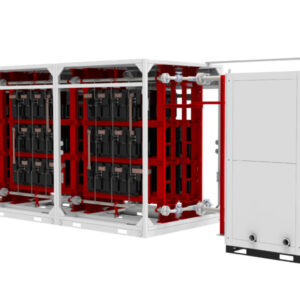
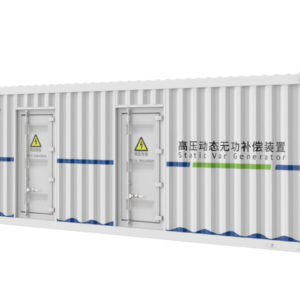
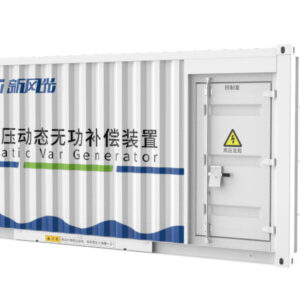
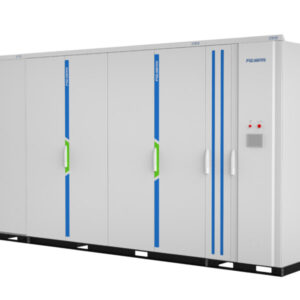
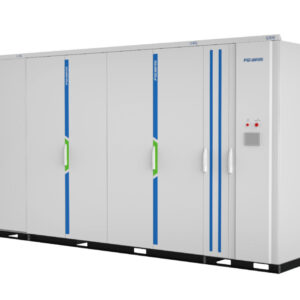
The SVG range spans 6 kV to 35 kV, indoor and outdoor, air and liquid cooled, with output from ±0.1 Mvar to ±200 Mvar. The engineering case for an SVG over a switched capacitor bank is straightforward: it regulates continuously rather than in steps, responds in under 5 ms, suppresses negative-sequence current and harmonics to the 13th order, and cannot resonate with the network the way a plain capacitor bank can. For arc furnaces, rolling mills, mine hoists, welding plant and renewable collector substations under grid-code reactive obligations, that behaviour is the requirement, not a refinement.
All units offer low voltage ride-through — 0 pu for 150 ms and 0.2 pu for 625 ms — so the compensator stays connected through the dips where the network most needs reactive support.